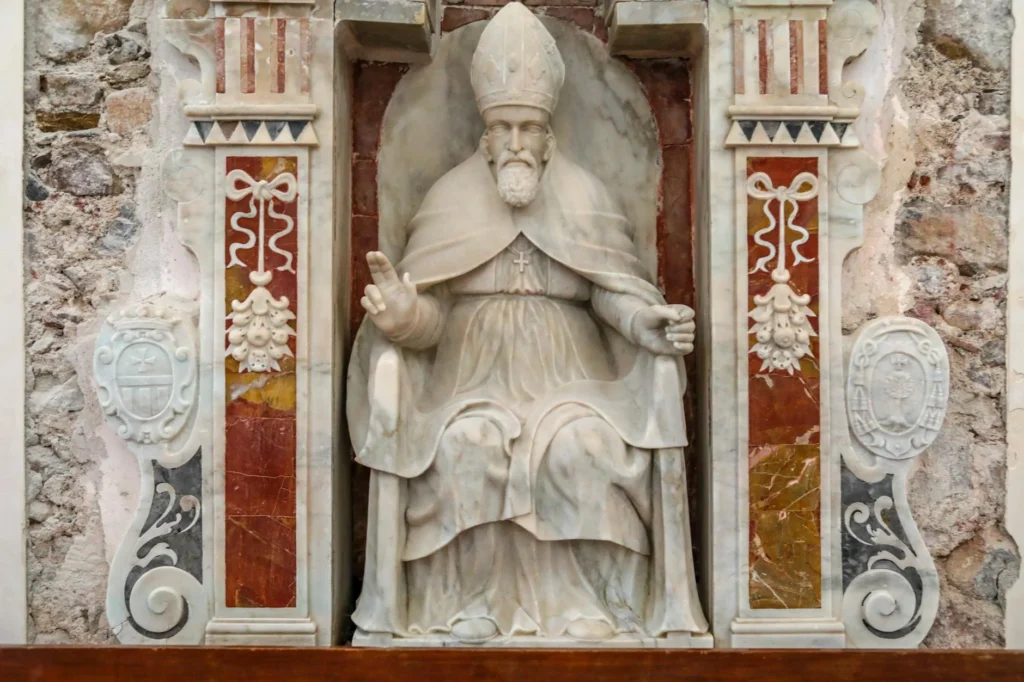
Pope Leo XIV recently released the first major written teaching of his papacy, an encyclical that specifically addresses the systemic threats posed by artificial intelligence. The pontiff highlighted three primary areas of concern: the replacement of human workers, the acceleration of warfare, and the exploitation of the environment. During the ceremony marking the release of this teaching at the Vatican, Chris Olah, co-founder of the AI firm Anthropic, appeared as a guest speaker alongside the pope.
This alignment has sparked significant debate regarding the compatibility of Anthropic’s business model with the moral warnings issued by the Catholic Church.

The core of the tension lies in the contradiction between the pope’s call for the preservation of human dignity in work and the actual output of frontier AI labs. Pete Furlong of the Center for Humane Technology argues that companies like Anthropic are designing technology specifically to replace human labor, which directly conflicts with the papal teaching.
This is supported by Anthropic’s own labor market analysis from March, which identified coders, customer service representatives, and data-entry workers as particularly vulnerable. Furthermore, Anthropic CEO Dario Amodei has previously warned of a potential apocalyptic loss of white-collar jobs in the near future, while a survey by Epoch AI indicates that 20% of full-time US workers already report that AI has taken over portions of their roles.
Critics, including Timnit Gebru, founder of the Distributed Artificial Intelligence Research Institute, have characterized this partnership as “Vatican-washing.” Gebru suggests that the alliance serves as a branding exercise for Anthropic to distinguish itself from competitors like Google and OpenAI by aligning with safety-oriented voices, while neglecting the rights of exploited data workers and those affected by the environmental impact of data centers. However, Chris Olah acknowledged the systemic pressures facing AI labs, stating that these organizations operate within incentives and constraints that can conflict with ethical imperatives, regardless of the sincere intentions of the individuals involved.
For CIOs and CTOs operating within the European Union, this discourse underscores a growing tension between corporate AI deployment and the socio-ethical frameworks that are increasingly influencing EU regulation. The pope’s focus on the “dignity of work” mirrors the spirit of the EU AI Act, which emphasizes human-centric AI and the mitigation of risks to fundamental rights. Consequently, IT leaders must recognize that the deployment of automation is no longer a purely technical or financial decision; it is becoming a matter of corporate social responsibility and ethical compliance. The risk of “safety-washing”—claiming a commitment to ethics while implementing disruptive automation—could lead to reputational damage and increased scrutiny from regulators.
Moreover, the emphasis on the “sanctity of life” and the dangers of AI in warfare mentioned in the encyclical aligns with the EU’s strategic autonomy goals and its strict stance on lethal autonomous weapons systems. European IT leaders managing defense or dual-use technology must ensure that their governance frameworks include rigorous ethical constraints to avoid the “lowering of the threshold for the use of force” described by the pontiff.
Therefore, the alignment between a major AI lab and a global moral authority suggests that the industry is moving toward a period of intense scrutiny where “safety” will be measured not just by technical guardrails, but by the socio-economic impact on the workforce.
Additionally, the mention of environmental exploitation in the Vatican’s teaching points toward a critical intersection with the EU’s Green Deal and Corporate Sustainability Reporting Directive (CSRD). As AI labs and the enterprises that use their models scale their infrastructure, the environmental cost of data centers—specifically water consumption and energy use—will become a primary KPI for IT managers.
European leaders must therefore integrate environmental impact assessments into their AI procurement processes to avoid the exact pitfalls highlighted in the papal teaching. The discourse suggests that the “feelgood” narrative of AI efficiency is being replaced by a demand for accountability regarding the physical and human costs of AI. From an architectural perspective, concerns about replacing workers support a shift toward augmentative systems with meaningful human oversight.
For IT architects, this means designing systems where AI handles repetitive tasks while ensuring that critical decision-making and oversight remain with human operators. This requires a technical transition toward more transparent AI orchestration layers that can audit how AI is interacting with human workflows. If the goal is to preserve the dignity of work, the technical implementation must prioritize tools that enhance human capability rather than automating the human out of the process entirely.er than automating the human out of the process entirely.

Furthermore, the discussion on “red lines” in warfare and the prevention of AI-driven collateral damage implies a need for more reliable “kill-switch” mechanisms and deterministic guardrails in frontier models. The technical challenge lies in moving beyond probabilistic safety filters toward verifiable safety proofs. For IT leaders, this means demanding higher levels of transparency from AI providers regarding their alignment processes. If AI labs are operating under conflicting incentives—as Olah admitted—the technical burden of verification shifts to the enterprise user, who must implement rigorous validation and verification (V&V) protocols to ensure The AI industry is currently split between those pursuing rapid scaling and those attempting to build a “safety-first” brand.
Anthropic’s engagement with the Vatican is a strategic attempt to position itself as the “responsible” alternative in a market dominated by aggressive commercialization. However, as noted by Professor Paolo Carozza, this positioning may be superficial if it does not lead to a fundamental change in how these companies approach labor and resource exploitation. The industry is seeing a trend where ethical alignment is used as a competitive differentiator, yet the underlying business models remain largely unchanged.thical alignment is used as a competitive differentiator, yet the underlying business models remain largely unchanged.
This dynamic reflects a broader struggle within the global tech ecosystem to balance venture capital expectations—such as the pressure to go public—with the ethical requirements of the societies they serve. The conflict between financial incentives and ethical imperatives is a systemic issue that affects not only the providers but also the enterprises adopting these tools. Consequently, the “Vatican-washing” critique serves as a warning to all IT leaders: ethical claims must be backed by measurable outcomes and transparent reporting to be credible in the eyes of regulators and the public.
Yes. When companies claim ethical alignment while their operational outcomes contradict those claims, they risk severe reputational damage and potential regulatory penalties under the EU AI Act. IT leaders should verify safety claims through independent third-party audits rather than relying on corporate branding.
It translates into the design of AI systems that act as assistants rather than replacements. This involves implementing interfaces that require human validation for critical steps and ensuring that AI is used to remove drudgery rather than eliminating the human role entirely.
The primary risks include the lowering of the threshold for using force and the reduction of human responsibility. For IT leaders in sensitive sectors, this means implementing stri
The Anthropic-Vatican collaboration on AI ethics reflects a growing trend of AI companies seeking to anchor their governance work in established ethical and institutional frameworks. Whether this partnership delivers substantive policy influence or primarily serves reputational purposes will depend on the concrete commitments and follow-through from both sides.hether this partnership delivers substantive policy influence or primarily serves reputational purposes will depend on the concrete commitments and follow-through from both sides.
The Holy See has been actively engaged in technology ethics since the 2020 Rome Call for AI Ethics, co-signed by Microsoft, IBM, FAO, and others. The Vatican’s Pontifical Academy for Life brings a long tradition of applied ethics to questions about human dignity, autonomy, and the common good — principles directly relevant to AI governance debates about safety, access, and fairness.
Vatican-washing (and ethics-washing more broadly) refers to the practice of associating with prestigious ethical institutions without making substantive changes to products, practices, or governance. Enterprises evaluating AI vendor claims should look for specific, enforceable commitments rather than general statements of principle. Membership in ethics bodies alone is not sufficient evidence of responsible AI development.
For procurement teams, a vendor’s engagement with ethics frameworks is one input among many. More relevant factors include transparent model documentation, third-party audits, clear data processing agreements, and demonstrated track records of responsible disclosure when problems arise. Institutional partnerships are worth noting but should not substitute for due diligence on technical and contractual safeguards.
Editorial disclosure: AI tools may have assisted research, drafting or editing. ITnovati remains responsible for the published text. Time-sensitive technical, legal and product claims should be checked against the linked primary sources.
 ITnovati